Security and Privacy Features
When comparing hardware wallets, security and privacy are the most important factors. In this Review: Ledger Nano X vs Trezor Model T, both devices deliver strong protection for your crypto assets — but they do it in slightly different ways.
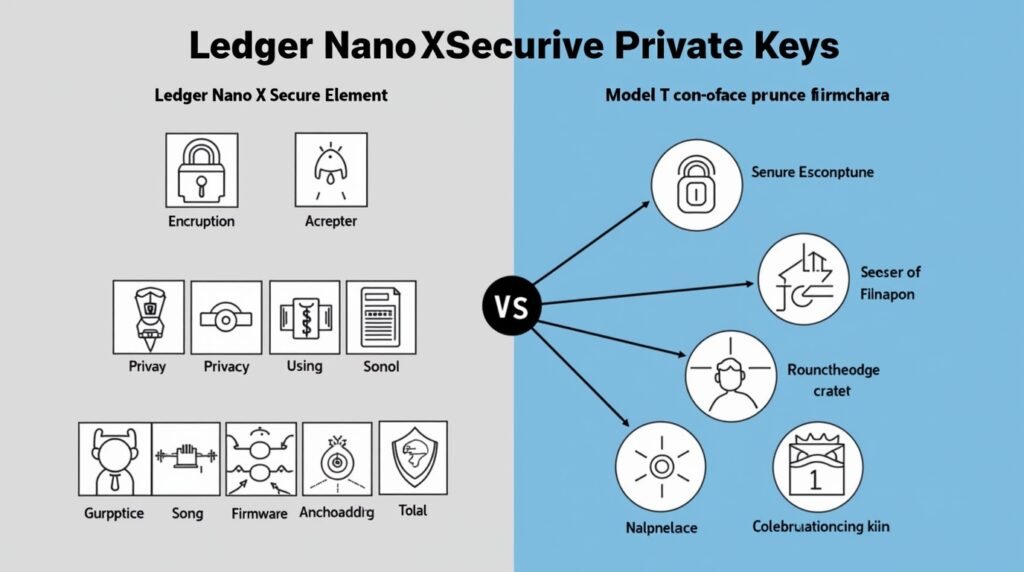
Ledger Nano X uses a Secure Element (SE) chip, the same type of chip used in passports and credit cards. This SE chip is certified (CC EAL5+) and ensures that private keys never leave the device. Ledger’s firmware, however, is partially closed source, which means the code cannot be fully audited by the public. This approach focuses on hardware-level protection and strict data isolation.
Trezor Model T, on the other hand, takes an open-source approach. Its firmware and software are publicly available for anyone to review, which promotes transparency and community trust. While it doesn’t use a Secure Element chip, it relies on strong encryption and PIN/passphrase protection to secure your private keys.
Both wallets offer essential privacy tools such as passphrase support and recovery seed backups, but Trezor provides deeper integration with privacy-focused wallets like Wasabi and Sparrow, making it slightly better for users who prioritize anonymity.
In summary, Ledger Nano X offers superior hardware-level security, while Trezor Model T provides transparency and open-source trust. Your choice depends on whether you value certified hardware security or open-source verifiability more.
Design, Usability, and Connectivity
When it comes to everyday use, design and usability can make or break a hardware wallet experience. In this Review: Ledger Nano X vs Trezor Model T, both devices offer premium designs, but they cater to slightly different user preferences.
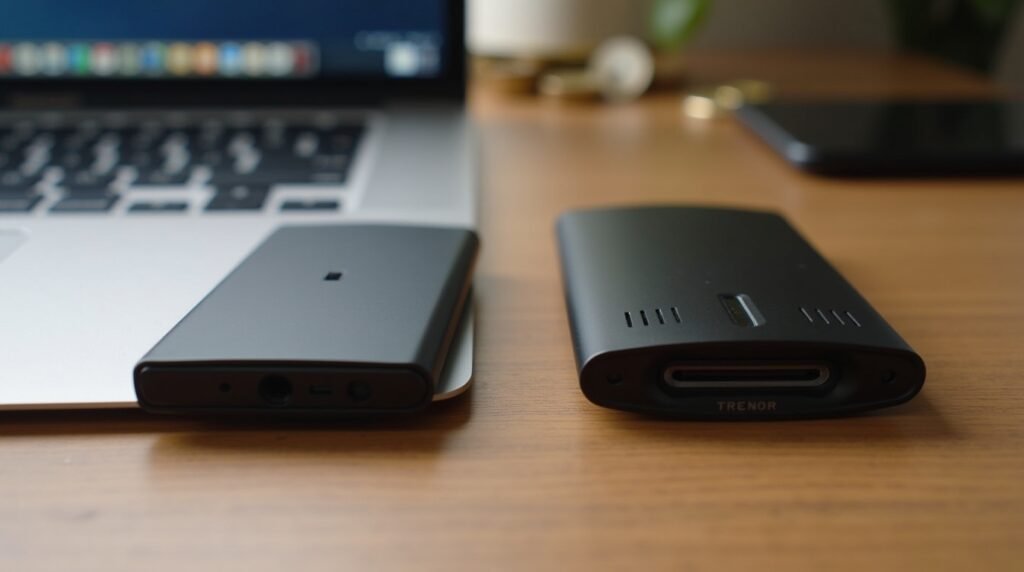
Ledger Nano X features a sleek, stainless-steel body that feels durable and compact — similar to a USB flash drive. Its small OLED screen is bright but limited in size, which means confirming transactions can take a few extra clicks. Navigation is handled by two physical buttons, keeping the device simple and minimal. Ledger’s Bluetooth connectivityis a standout feature, allowing you to manage your crypto via the Ledger Live mobile app on iOS and Android without plugging in cables.
Trezor Model T, in contrast, opts for a larger color touchscreen, which makes it more intuitive to use. The touchscreen simplifies tasks like entering PINs or confirming addresses — ideal for beginners who prefer visual guidance. The device connects via USB-C and integrates seamlessly with the Trezor Suite desktop app, offering a straightforward setup and clean interface. However, it lacks Bluetooth support, meaning it’s strictly a wired connection.
In short, Ledger Nano X wins for portability and mobile connectivity, while Trezor Model T excels in user-friendliness and visual control. Your choice depends on whether you prefer wireless convenience or a larger, more interactive screen.
Supported Coins, Pricing, and Value for Money
In this Review: Ledger Nano X vs Trezor Model T, another major factor to consider is how many cryptocurrencies each wallet supports and whether they deliver good value for their price.
Ledger Nano X supports over 5,500 cryptocurrencies, including popular coins like Bitcoin, Ethereum, Solana, and XRP, as well as countless ERC-20 tokens and NFTs. Its integration with the Ledger Live app makes it easy to buy, sell, stake, and manage crypto directly from one dashboard. This wide compatibility and built-in staking support make it appealing for users with diverse portfolios.
Trezor Model T, while supporting fewer assets (around 1,200 coins and tokens), focuses on strong integration with open-source wallets like Exodus, Electrum, and Wasabi. It’s especially popular among privacy-minded users and Bitcoin maximalists who prefer transparency and advanced coin-control features. Although Trezor’s range of supported assets isn’t as broad as Ledger’s, it still covers all major cryptocurrencies.
In terms of pricing, the Ledger Nano X usually costs around $149 USD, while the Trezor Model T is priced slightly higher at $179 USD. The price difference largely reflects the touchscreen interface and open-source firmware of the Trezor Model T.
When it comes to value for money, the Ledger Nano X offers a more feature-packed experience for most users — especially those who want Bluetooth connectivity and broad crypto support. The Trezor Model T, however, justifies its price for users who prioritize privacy, open-source transparency, and usability.
In summary, if you’re looking for maximum coin compatibility and wireless convenience, the Ledger Nano X delivers better overall value. But if transparency and privacy are your top priorities, the Trezor Model T is worth the extra cost.