What Is Blockchain? A Simple Overview for Beginners
If you’ve ever wondered “What is blockchain? A simple explanation for beginners”—you’re not alone. Blockchain can sound like a complicated tech term, but at its core, it’s actually a very straightforward concept.
In simple terms, blockchain is a digital way to record information so that it’s secure, transparent, and nearly impossible to change or hack. Think of it like a shared online notebook that everyone can see, but no one can erase or alter once something is written down.
Instead of being stored on one computer or controlled by a single company, blockchain data is stored across a network of computers (called nodes). Each computer has a copy of the same information, which keeps the system honest and trustworthy.
Here’s how it works in basic steps:
- Information (like a transaction or record) is grouped into a “block.”
- Each block is given a unique code (called a hash) and linked to the block before it — forming a “chain” of blocks.
- Once added, the data in a block cannot be changed, making it tamper-proof.
This decentralized design means no single person or organization owns the blockchain, and everyone can verify what’s on it. That’s why it’s considered one of the most transparent and secure digital systems in the world.
You might have heard about blockchain in connection with Bitcoin or cryptocurrencies, but its uses go far beyond digital money. It’s now being explored for tracking supply chains, verifying digital identities, and even securing voting systems.
In short, blockchain is a technology that builds trust through transparency and decentralization—and it’s shaping the future of how we share, verify, and store data online.
How Blockchain Works: The Technology Explained Simply
Now that we understand what blockchain is, let’s look at how blockchain works — in simple, beginner-friendly terms. If you’re searching for “What is Blockchain? A Simple Explanation for Beginners,” this is where everything starts to make sense.
At its core, blockchain is a digital ledger — a record book that’s shared across a network of computers. Every time someone makes a transaction or records new data, that information is added to a block. Once a block is filled with data, it’s linked to the previous one, creating a chain of blocks — hence the name “blockchain.”
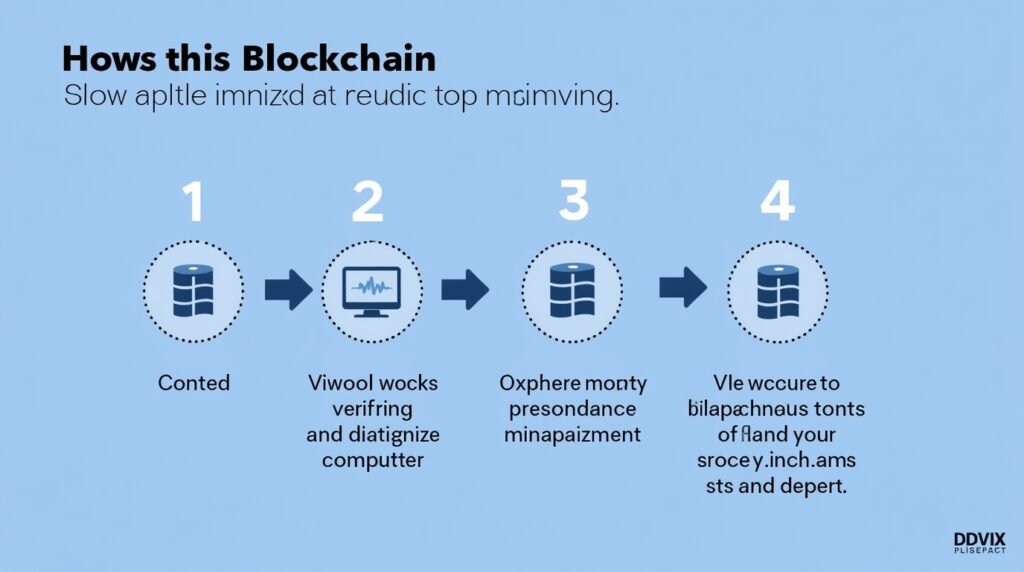
🔹 Step-by-Step: How Blockchain Works
A transaction is requested.
Someone initiates an action — for example, sending cryptocurrency or recording a contract.
- The transaction is verified.
The network of computers (called nodes) checks if the transaction is valid. This process ensures that no one can cheat or duplicate data. - The transaction is added to a block.
Once verified, the information is grouped with other transactions inside a new block. - The block is linked to the previous one.
Each block has a unique code called a hash. When a new block is added, it includes the hash of the block before it — forming a secure, connected chain. - The data becomes permanent.
After being added to the chain, the block cannot be changed or deleted. This makes blockchain secure, transparent, and tamper-proof.
🔹 Why Blockchain Is So Secure
The reason blockchain is trusted by so many industries is because it doesn’t rely on one central authority. Instead, every participant in the network has a copy of the blockchain. If someone tries to change data on one computer, the rest of the network immediately rejects that version.
This combination of decentralization, verification, and encryption is what makes blockchain technology so reliable — even for financial and legal systems.
🔹 Public vs. Private Blockchains
- Public Blockchains: Open to everyone. Anyone can join, view, or add transactions (like Bitcoin or Ethereum).
- Private Blockchains: Used by organizations for internal purposes. Only authorized members can participate.
Both types follow the same principles, but they differ in accessibility and control.
In essence, blockchain works by creating a shared, secure, and transparent record system — without needing banks, middlemen, or third parties to verify trust.
Real-World Uses of Blockchain Today
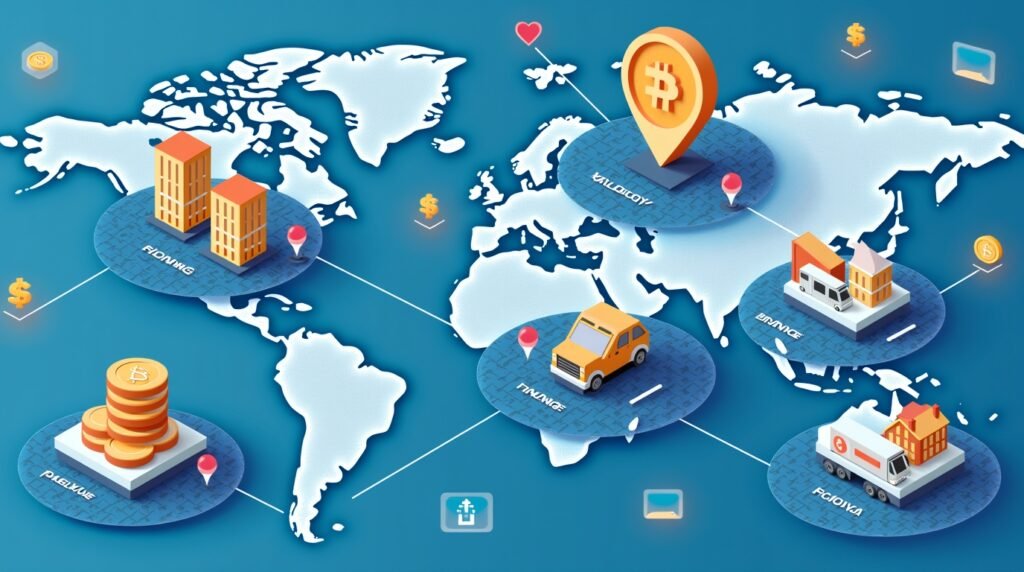
Now that you know what blockchain is and how it works, let’s explore how this technology is being used in the real world today. Understanding these applications helps make “What is Blockchain? A Simple Explanation for Beginners” come to life — showing why it’s such a game-changer across industries.Blockchain isn’t just about cryptocurrencies like Bitcoin or Ethereum anymore. Its secure and transparent nature has inspired innovative uses in finance, healthcare, logistics, and more.
🔹 Cryptocurrencies and Digital Payments
The most common use of blockchain is in digital currencies. Blockchain makes it possible to send and receive money securely without needing a bank or middleman. Every transaction is recorded on the blockchain, making it transparent and nearly impossible to alter.Example: Bitcoin and Ethereum use blockchain to verify transactions globally within minutes.
🔹 Smart Contracts
Smart contracts are self-executing agreements stored on a blockchain. They automatically carry out actions (like sending payment or granting access) once specific conditions are met — no lawyers or intermediaries required.Example: In real estate, a smart contract can release payment automatically once a property title is transferred.
🔹 Supply Chain Management
Blockchain helps track goods from production to delivery with complete transparency. Every step in the process is recorded, reducing fraud, errors, and delays.Example: Companies like IBM and Walmart use blockchain to monitor food safety — tracing products back to their source within seconds.
🔹 Healthcare and Medical Records
Blockchain ensures that patient data is secure, accurate, and accessible only to authorized people. It can also help share medical records between hospitals or doctors without risking privacy breaches.Example: Some healthcare systems are testing blockchain to securely manage vaccination and treatment histories.
🔹 Digital Identity and Voting Systems
With blockchain, individuals can own and control their digital identities securely. Governments are exploring blockchain to create tamper-proof voting systems, reducing fraud and improving trust in elections.Example: Countries like Estonia have piloted blockchain-based e-voting platforms for secure digital participation.
🔹 Real Estate and Property Ownership
By recording property titles on blockchain, ownership transfers become faster, cheaper, and safer. This reduces paperwork and the risk of fraud, especially in areas with weak recordkeeping systems.Pros, Cons, and the Future of Blockchain
As we’ve explored in “What is Blockchain? A Simple Explanation for Beginners,” this technology is transforming how we share and verify information online. But like any innovation, blockchain has both advantages and challenges. Understanding these helps beginners see where blockchain shines — and where it still needs improvement.
🔹 The Pros of Blockchain
Transparency and Trust
Every transaction on a blockchain is visible to all participants. This openness builds trust because the data cannot be hidden or altered once recorded.
Security and Immutability
Once information is added to the blockchain, it’s nearly impossible to change. Data is encrypted and verified by multiple computers, reducing the risk of hacking or fraud.
Decentralization
Unlike traditional systems controlled by one central authority, blockchain is run by a network of users. This makes it more resistant to corruption, censorship, or single-point failures.
Efficiency and Speed
Blockchain removes middlemen, which can make processes like sending money, verifying contracts, or transferring property faster and cheaper.
Global Accessibility
Anyone with an internet connection can use blockchain technology — opening up new financial and business opportunities worldwide.
🔹 The Cons of Blockchain
Energy Consumption
Some blockchains, especially those using proof-of-work (like Bitcoin), require significant computing power, which consumes large amounts of energy.
Scalability Issues
As blockchains grow, they can become slower and more expensive to maintain. Developers are working on new methods to make them more scalable.
Regulatory Uncertainty
Governments around the world are still figuring out how to regulate blockchain and cryptocurrencies. This uncertainty can make adoption more complex.
Complexity for Beginners
Even though we can give a simple explanation for beginners, the technology behind blockchain can still feel technical or intimidating for those just starting out.
Potential for Misuse
Because blockchain allows anonymous transactions, it can sometimes be used for illegal or unregulated activities — though this is a small portion of overall use.
🔹 The Future of Blockchain
The future of blockchain looks promising and innovative. As the technology matures, new developments are making it faster, greener, and easier to use.
- Web3 and Decentralized Apps (dApps): Blockchain is powering the next version of the internet, where users own their data and digital assets.
- DeFi (Decentralized Finance): Financial systems are being rebuilt on blockchain to make banking and lending more accessible worldwide.
- NFTs and Digital Ownership: Blockchain gives creators the ability to prove ownership of digital art, music, and collectibles.
- Government and Business Adoption: From digital IDs to transparent supply chains, blockchain is being tested for large-scale real-world solutions.